


MintPull
3.9142.00 Reviews
App Specs
- Version
- 1.0.1
- Updated On
- License
- Free
- Downloads
- 10,000+
- Developer
- Amber444
- Categories
- Shopping
- Platform
- Android
Screenshots


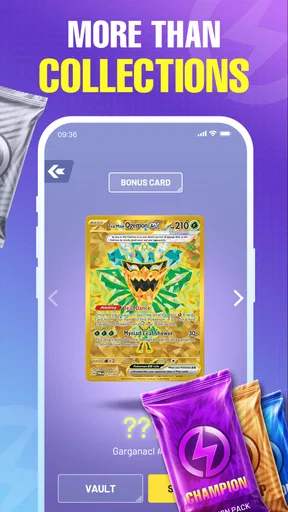
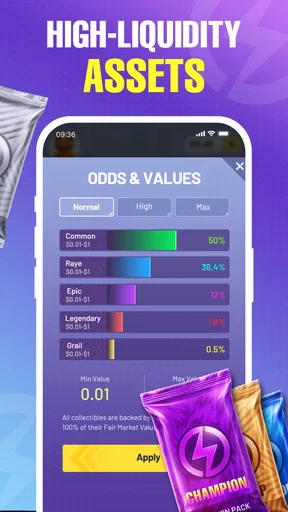

 Analysis by AppCompare
MintPull caught my attention because it turns the simple act of opening card packs into the main shopping experience. The idea is easy to understand: you rip packs, look for rare collectibles, and decide what those finds are worth to you. After spending time with it, I see a product with a strong first-week hook, but also one that needs a clear place in your routine before it earns lasting space on your phone.
This is a free shopping app from Amber444, rather than a conventional marketplace where I browse ordinary products and place standard orders. Its mature 17+ rating also sets a different expectation from a casual family shopping tool. The appeal is aimed at people who enjoy the suspense of collectible cards and the small rush of discovering something uncommon. If that describes you, the app makes sense immediately. If you want predictable purchases, detailed product comparison, or a quiet way to manage shopping, it is probably the wrong direction.
Why the first week feels more exciting than ordinary shopping
The strongest part of MintPull is the opening moment. A regular shopping app asks me to search, compare, check a price, and complete a transaction. Here, the attraction is uncertainty. I am not only looking for a card; I am anticipating what might appear when a pack is opened. That makes each session feel closer to a small collecting ritual than to routine retail.
That distinction matters. The app is not most useful when I treat it like a general-purpose store. It works better when I approach it as a focused collectible hunt. The store summary, “Rip Card Packs. Score Rare Collectibles,” communicates that central loop, but the practical question is whether the excitement survives after the first few discoveries. In my experience, the novelty is strongest when I set a purpose before opening anything instead of tapping through packs without a plan.
During the first week, I would recommend deciding what kind of collector you want to be. You might chase only cards that appeal to you visually, focus on completing a particular personal theme, or treat every interesting pull as a reason to learn more about the hobby. Without that small decision, the experience can become repetitive quickly because the opening animation or reveal is doing most of the emotional work.
A useful habit is to pause after each notable pull and record why it matters to you. Is it rare, attractive, useful for a collection, or simply memorable? That question sounds basic, but it prevents the app from becoming a sequence of forgettable reveals. It also gives the shopping side more meaning: you are not merely accumulating items, you are building a collection with a reason behind it.
The app’s free price makes trying that routine easy. I can explore the concept without first committing money to a subscription or purchase. That lowers the barrier for curious collectors, especially someone who wants to see whether digital pack opening fits their interests. Free access, however, should not be confused with unlimited value. The real test is whether the experience remains enjoyable once the initial curiosity has settled.
Worth Reading Before You Choose

Flipboard Shows What News Apps Must Do Beyond the Feed

Switching to Android Auto Means Rethinking Your Driving Routine

Google Calendar Makes a Crowded Week Easier to Manage

Ludo King Makes the Most of the Minutes Between Plans

Baby Panda World Brings Quick Play to Modern Phones, but Its Game Library Feels Busy

ESPN’s Live Game View Makes Following Close Games Easier
MintPull has already attracted more than ten thousand installs, with an average rating of three and a half from roughly two hundred seventy ratings and over one hundred reviews. I read that as a sign of mixed but meaningful interest rather than universal enthusiasm. There is enough attention to suggest that the premise connects with people, while the middle-of-the-road score is a reminder to judge the day-to-day experience personally instead of assuming the concept alone guarantees satisfaction.
How I would use it in an everyday situation
Imagine having a short break after work and wanting something more engaging than scrolling through a normal store. I could open MintPull, decide that I am searching for one kind of collectible, and give myself a brief session. The important part is the limit: I would stop after the planned session, review what I found, and return later only if I still had a genuine reason to continue.
That approach makes the app feel like a hobby rather than an impulse machine. It also helps answer a question many new users have: should every pack be opened immediately? I would say no. Keeping a little anticipation is valuable. If every visit becomes a rapid attempt to reproduce the first exciting pull, fatigue arrives much sooner.
Another practical use is sharing the discovery with friends who already understand collectible culture. A rare-looking find can start a conversation in a way that an ordinary shopping basket cannot. Still, I would avoid treating a pull as automatically valuable just because it feels special. Enjoyment and market value are different things, and keeping that distinction clear is one of the healthiest ways to use the app.
What remains after the novelty fades
The month-to-month question is harder. A pack-opening app can be compelling for several sessions while offering little reason to return once the surprise becomes familiar. MintPull earns repeat visits only if collecting itself becomes the habit, not if I depend entirely on the reveal effect. That is why I think the app is best for people who enjoy organizing interests, comparing discoveries, and slowly shaping a personal collection.
For me, recurring value would come from giving each visit a small objective. One session might be for reviewing previous finds. Another could be for looking for a particular type of card. A later visit might be about deciding which items deserve attention and which were only momentarily exciting. This turns a random activity into a sequence of decisions, which is more sustainable than opening packs simply because the app is available.
The trade-off is that MintPull may feel thin for users who want a complete collecting system around the packs. I would not choose it as a replacement for a dedicated catalog, a specialist marketplace, or a community built around detailed card information. Those alternatives are better when the main goal is researching authenticity, tracking a collection carefully, comparing offers, or making informed buying decisions. MintPull’s strength is the opening experience, not the full infrastructure of serious collecting.
That comparison also explains who should skip it. If you dislike chance-based shopping experiences, the central idea may feel frustrating rather than entertaining. If you need a clear route from browsing to ownership, a conventional retail app will probably be more efficient. And if you are trying to control unplanned spending or avoid collecting temptations, the mature age rating is worth taking seriously as a signal to approach the app thoughtfully.
The current version is 1.0.1, so I would judge it as an early product rather than a fully mature destination for long-term collectors. That does not make it unusable. It simply means I would keep expectations focused on the core experience and pay attention to how well the app supports continued interest over time. Early versions can be enjoyable, but they also make maintenance and consistency especially important.
A routine that gives the app a fair chance
My preferred routine would be simple. Before opening the app, I would choose a modest goal. During the session, I would avoid treating every reveal as a reason to continue. Afterward, I would note the pulls that genuinely interested me and leave the rest behind. Once a week, I would look back at the collection and ask whether it is becoming more meaningful or merely larger.
This workflow reveals a useful trade-off: the app can provide more satisfaction when I add my own structure, but that also means some of the long-term work falls on me. Users who want the application to supply all the motivation may lose interest sooner. Collectors who enjoy setting themes and reviewing progress have more room to make the experience personal.
I would also separate “rare” from “wanted.” A rare collectible can be exciting, but a less unusual card may fit my interests better. That distinction keeps the app from turning into a constant search for the most impressive result. It also makes the collection less dependent on luck. I can still enjoy the surprise while judging each pull by my own preferences.
The maintenance burden and the points where fatigue appears
MintPull is easy to understand, but easy does not always mean effortless over time. The maintenance burden comes from managing attention. I need to decide when to open packs, what to remember, and how to prevent the collection from becoming a pile of disconnected discoveries. If I ignore those decisions, the app risks becoming something I open automatically and abandon just as quickly.
There is also a mental maintenance cost in keeping expectations realistic. The phrase “rare collectibles” naturally encourages the hope of an exceptional result. When several sessions feel ordinary, the contrast can make the experience less rewarding. I find that it helps to value the process of collecting rather than measure every visit against the best possible pull.
The first source of fatigue is repetition. Pack opening is naturally built around a repeated action, and repetition needs variety or purpose to stay interesting. A second source is unclear progress. If I cannot tell how my collection is developing, each session may feel isolated. A third is decision overload: when every item seems potentially important, the act of sorting personal favorites from forgettable results becomes tiring.
That is why I would not recommend marathon sessions. Short visits preserve some anticipation and make it easier to stop while the experience is still enjoyable. I would also avoid opening packs during moments when I am bored, stressed, or looking for an instant reward. In those situations, the app can become a reflex rather than a hobby, and the difference matters if I want it to remain enjoyable month after month.
Another question a new user may have is whether the app is suitable for younger family members. I would not treat it as a child-oriented shopping app. Its mature 17+ content rating means I would keep it for adults and follow the same caution I would use with any experience built around collectible discovery and shopping-style temptation. That is not a criticism of the concept; it is simply part of choosing the right audience.
Privacy and device comfort are also practical considerations whenever I install a shopping app. I would review the app’s current permissions and behavior on my own device before making it part of a daily routine. I would also keep the application updated, particularly because version 1.0.1 suggests that the product is still at an early stage. Those are small steps, but they reduce friction and help me notice whether the app continues to fit my habits.
When another option is the better choice
If my goal is to buy a specific card, I would usually prefer a standard marketplace or a specialist collector platform. Those services are designed for targeted searches and direct comparison, while MintPull is designed around discovery. If my goal is to maintain a detailed inventory, I would choose a dedicated collection tracker. If my goal is social discussion, I would look for a community with active conversations and shared expertise.
MintPull makes more sense when I want the uncertainty itself. It occupies a space between shopping and entertainment, and that hybrid identity is both its appeal and its limitation. It is less efficient than a conventional store and less comprehensive than a serious collector’s toolkit, but it can be more playful than either when I want a short, focused session built around the possibility of a surprising find.
The app’s free access is another reason it works well as an experiment. I can test whether the central loop fits my personality without making it a major commitment. Still, I would not judge its long-term value by the first free session. I would give it several visits with a deliberate routine, then ask whether I am returning because I enjoy collecting or merely because I am chasing the feeling of the next reveal.
My long-term verdict on MintPull
I like MintPull most as a lightweight entry point for adults who already enjoy card collecting or want to explore the excitement of pack opening. The developer, Amber444, has built the product around a clear idea, and the shopping category feels unusual here because the main reward is discovery rather than efficient purchasing. That focus gives the app personality, but it also narrows its audience.
For lasting value, I would give it a conditional recommendation. It earns space on my phone if I use it with boundaries, keep personal collecting goals, and enjoy reviewing what I find. It does not earn that space if I expect a full marketplace, a professional collection database, or endless novelty. The app cannot replace those tools, and trying to force it into that role would make its weaknesses more obvious.
My strongest advice is to create a stopping rule before the excitement takes over. Decide how long a session should last, what kind of pull would genuinely interest you, and how often you want to return. This turns MintPull from an open-ended temptation into a controlled hobby. It also makes the month-to-month test fairer because I can measure whether the experience adds enjoyment rather than simply consuming attention.
I would recommend it to a collector who enjoys surprise, does not need every session to produce something exceptional, and is willing to supply a little organization. I would steer a value-focused shopper toward a conventional marketplace, and I would steer a serious archivist toward a dedicated tracking tool. Those are not failures on MintPull’s part; they are signs that the app has a specific job.
In the end, the question is not whether opening card packs can be exciting. It clearly can. The more important question is whether I still care about the collection after the reveal is over. MintPull has enough charm to make that first week enjoyable, and its free availability makes testing the idea straightforward. Its lasting place depends on whether I turn those individual discoveries into a personal habit instead of repeating the same novelty loop. For the right adult collector, that can be enough. For everyone else, the appeal may fade before the app becomes a regular part of shopping life.
Pros
- Simple interface makes daily expense tracking quick.
- Useful reminders help users stay aware of upcoming payments.
- Supports better budgeting by organizing spending in one place.
- Lightweight design runs smoothly on many devices.
- Clear financial summaries make spending patterns easier to understand.
Cons
- Some advanced budgeting tools may require a paid plan.
- Limited customization can frustrate users with complex finances.
- Manual data entry may become time-consuming for frequent transactions.
- Financial features may vary depending on region or account type.
- Users may need to verify privacy settings before adding sensitive data.
FAQs for MintPull
What is MintPull and what can I use it for?
MintPull is a digital application designed to help users manage and interact with supported services through a mobile device. Depending on the version and region, its tools may include account access, content management, notifications, and other connected features. Before downloading, check the official store description carefully, because available functions can vary by platform, country, account type, and future updates.
Is MintPull free to download and use?
MintPull may be available as a free download, but some functions could require in-app purchases, a subscription, registration, or access to a separate service. I recommend reviewing the pricing information shown on the Google Play Store or Apple App Store before installing it. Also check whether payments renew automatically, what trial terms apply, and whether certain features are limited in the free version.
What permissions does MintPull require?
During installation or first use, MintPull may request permissions such as internet access, notifications, storage, camera, microphone, location, or account information, depending on the features you use. These permissions should match the app’s stated purpose. You can review and change them later in your device settings, although denying essential permissions may prevent some features from working correctly.
Is MintPull safe and trustworthy to use?
The safest way to use MintPull is to download it only from its verified Google Play Store or Apple App Store listing and confirm the developer name, reviews, update history, and privacy details. Avoid modified APK files or unofficial download links. Before creating an account, read the privacy policy and consider what personal information the app collects, stores, shares, or uses for analytics.
Which devices are compatible with MintPull, and does it require an account?
Compatibility depends on the current version of MintPull and the operating system requirements listed in the official store. Make sure your Android or iPhone has enough storage and runs a supported version of the operating system. The app may also require an account, email address, phone number, or connection to another platform. Check these requirements before downloading to avoid setup problems.


